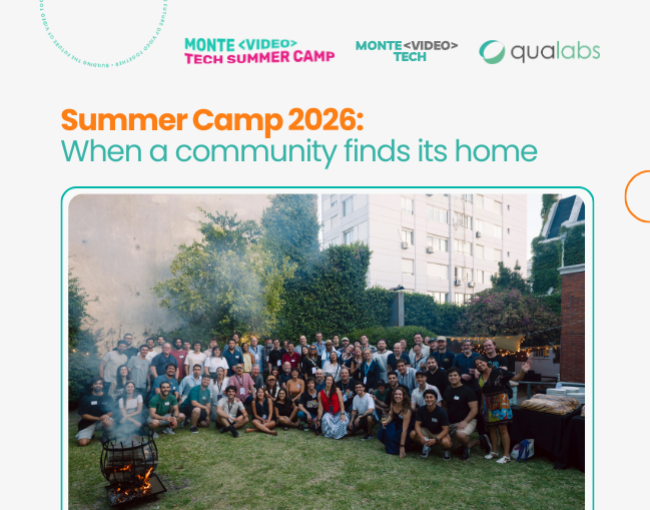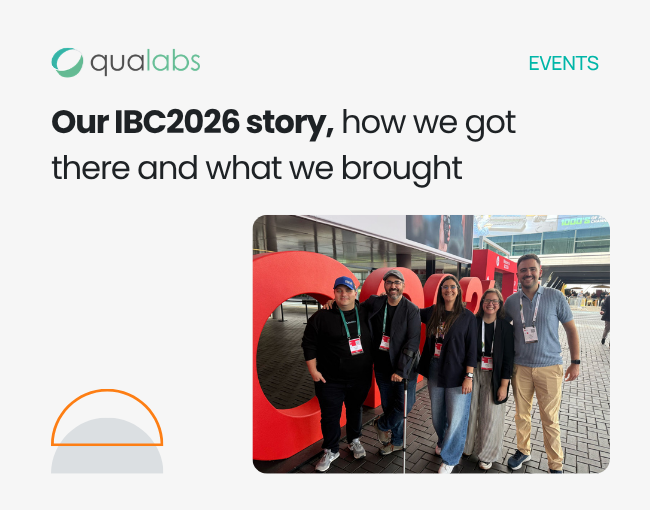
Here is what is coming, who is behind it and how to be part of it.
Watch the full kickoff, live on Friday, November 6.
Summer Projects: learning by building
Summer Projects were born from a simple idea: the best way to learn a technology is to build with it, next to people who know it well. As Nico Levy, our CTO, said when he opened the call, if there is a technology you have been wanting to learn for a while, this is the place to finally do it. You can arrive knowing very little about the topic. You learn by doing, you share what you know, and everyone leaves knowing something new.
Everything we build is open source and goes back to the media community. From November to January, each project meets once a week and keeps moving async in between. In February we close the circle in person in Montevideo, where we show what we built together at Demo Day.
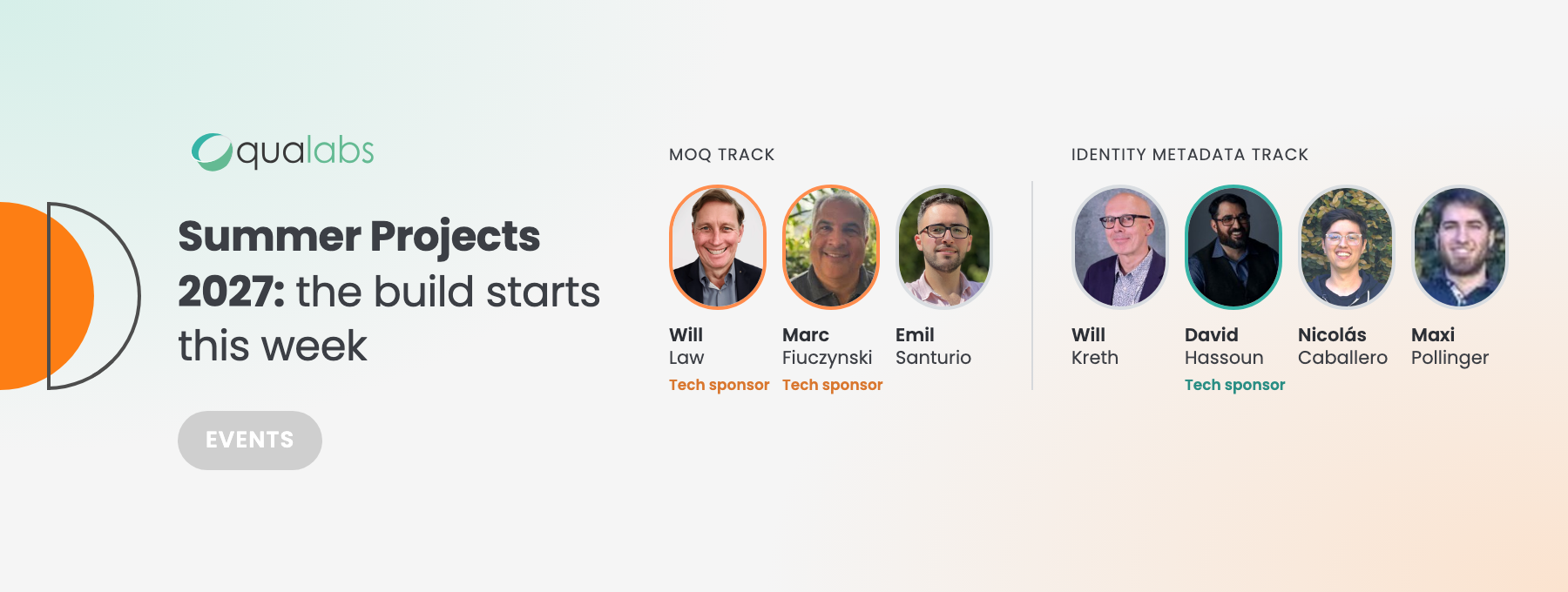
This year the community sent nine proposals and more than 60 people voted. Three projects made it, and they will run as two tracks.
MoQ Track: taking Media over QUIC closer to production
Media over QUIC is one of the fastest-moving technologies in streaming. It is being shaped right now, and there is still a lot to build before the whole industry can adopt it, which makes it the perfect place to learn by building. For the second year in a row, it was also the topic our community voted for the most.
When the votes came in, the two most voted proposals were both about MoQ:
- FEC with MoQ, proposed by Marc Fiuczynski: bringing Forward Error Correction to MoQ.
- A MoQ player ready for commercial use, proposed by Will Law, who sent more proposals than anyone this year.
Looking at them side by side, we saw two halves of the same story: a protocol needs protection to stay reliable on live streams, and it needs a great player to reach audiences. So we brought them together into one MoQ Track, where both projects grow side by side.
The track also has room for other MoQ ideas the community raised. Anyone who wants to explore one can bring it to the weekly calls and get feedback from the group.
FEC with MoQ
Marc Fiuczynski, visiting researcher at Rutgers University, proposed bringing Forward Error Correction to MoQ. FEC recovers lost data on the spot, so low-latency live streams stay smooth when the network gets rough. Marc already has working code running with Playa and Shaka Player.
Over the next three months, the team will explore:
- a player that chooses bitrate and protection together
- content-aware protection that uses less data during congestion
- realistic QA measurements
A MoQ player ready for audiences
Will Law from Akamai wants MoQ to have a player that looks and feels ready for commercial use. The plan brings three pieces together:
When the MoQ Track meets
13:00 Montevideo · 11:00 ET · 8:00 PT · 17:00 CET
Led by Emil Santurio from Qualabs. The first call is on Friday, November 13.
Identity Metadata Track: identity that travels with the video
The question behind it
Generative AI is making digital replicas part of everyday production. That raises a question the industry needs to answer: how do a person's identity and consent travel with the content, from production all the way to playout?
The question already shows up in advertising and in content localization, where knowing who appears on screen, and with what consent, matters more every day.
The project
Will Kreth, founder and executive director of HAND (Human & Digital), brought that question to the community. HAND works on persistent identifiers for human likeness based on international standards, an idea that started as a proof of concept at the IBC 2024 Accelerator. Its "Who's in the Ad" work with Ad-ID and CIMM uses a simple model:
- a Type 1 ID for the person
- a Type 2 ID for their licensed likeness or digital replica, linked to the person
- consent events recorded in the HAND registry
The goal is to make talent a first-class identifier in the media supply chain, so measurement and verification can happen automatically.
This Summer, the track will follow that identity step by step, from the moment it is minted in the HAND registry all the way to distribution and playout:
- Mintedin the HAND registry
- Packagedwith the content
- Distributedthrough HLS, SCTE standards and MoQ
- Played outstill attached to the video
One of the big questions on the table: can content credentials and identity stay with the video through packaging and every transformation along the way?
This is HAND's first Summer Camp. The plan is to show up, bring HAND's API to the process and build the answers together with the community.
When the Identity Metadata Track meets
12:00 Montevideo · 10:00 ET · 16:00 CET
Led by David Hassoun, Chief Solution Architect at Qualabs and co-chair of the SVTA Advertising Working Group, together with Nicolás Caballero and Maximiliano Pollinger from Qualabs. The first call was on Thursday, November 12.
How to pull up a chair
There is room for every kind of experience, and both ways of contributing matter just as much.
Share what you know
If you have lived the day-to-day of media operations and know where workflows get stuck, your point of view helps the team decide what to build.
Build
Write code, review pull requests or prototype ideas, with AI as your sidekick if you like. For the MoQ player, the team is looking for TypeScript and JavaScript skills and a good understanding of how video players work. If you are still learning, joining is the best way to grow them.
Join the calls and the conversation
Jump into the weekly call of your track, and join the Video Dev Discord. Each track has its own room there, plus a voice room that keeps the team company while they code.
Key dates
See you in Montevideo
What starts this week as a weekly call ends with all of us in one room in Montevideo, showing the industry what the community built together. We hope to welcome many of you there the first week of February.
The three tech sponsors will be there too: Will Law, Marc Fiuczynski and Will Kreth are joining us in person in Montevideo, so Demo Day will bring each track and the people behind it together in the same room.
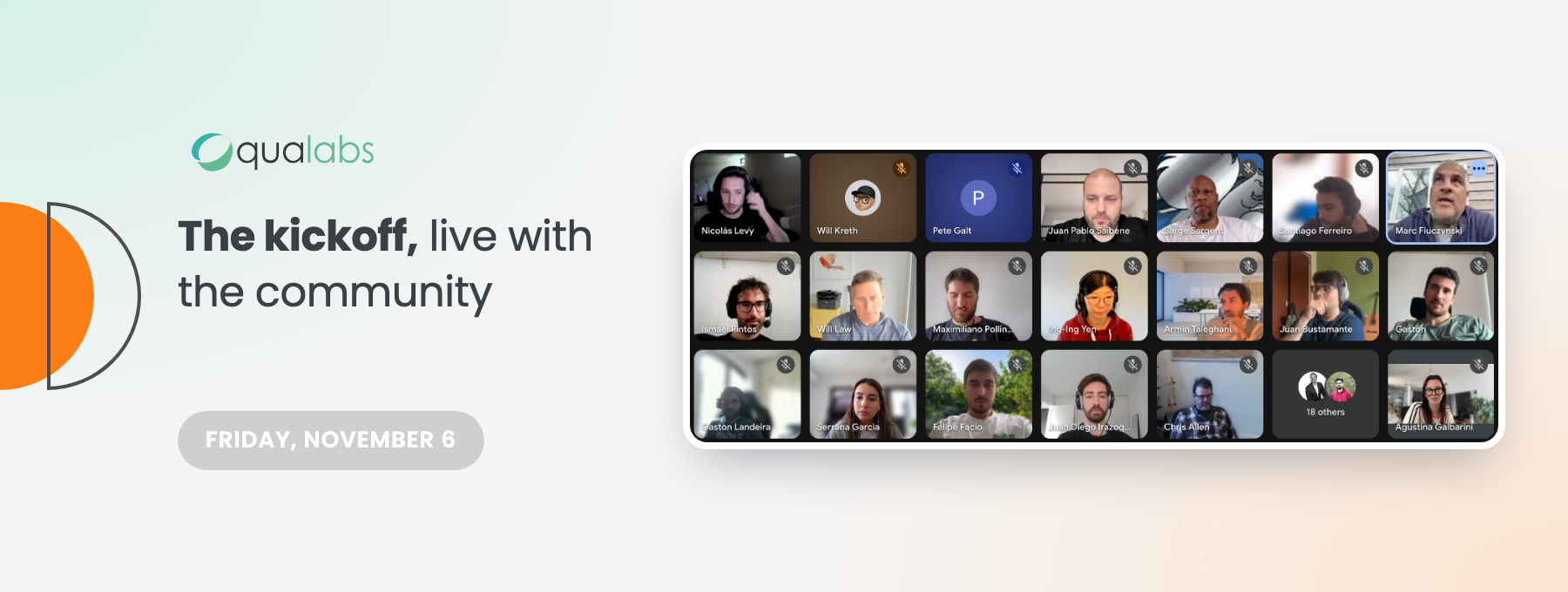
Thank you to all for bringing these projects to life, to everyone who voted, and to everyone who joined us on Friday. The Summer has officially started, and we are so excited to build it with you. 💚
Hasta la vista, downtime! See you February 1–5 in Montevideo.